
𝗔𝗹-𝗚𝗵𝗮𝘇𝗮̄𝗹𝗶̄’𝘀 𝗠𝗼𝗿𝗮𝗹 𝗣𝘀𝘆𝗰𝗵𝗼𝗹𝗼𝗴𝘆: 𝗙𝗿𝗼𝗺 𝗦𝗲𝗹𝗳-𝗖𝗼𝗻𝘁𝗿𝗼𝗹 𝘁𝗼 𝗦𝗲𝗹𝗳-𝗦𝘂𝗿𝗿𝗲𝗻𝗱𝗲𝗿

𝘞𝘩𝘢𝘵 𝘪𝘧 𝘵𝘩𝘦 𝘱𝘢𝘵𝘩 𝘵𝘰 𝘬𝘯𝘰𝘸𝘭𝘦𝘥𝘨𝘦 𝘸𝘢𝘴 𝘯𝘰𝘵 𝘵𝘰 𝘦𝘹𝘱𝘢𝘯𝘥 𝘺𝘰𝘶𝘳 𝘸𝘪𝘭𝘭 —𝘣𝘶𝘵 𝘵𝘰 𝘴𝘶𝘳𝘳𝘦𝘯𝘥𝘦𝘳 𝘪𝘵?
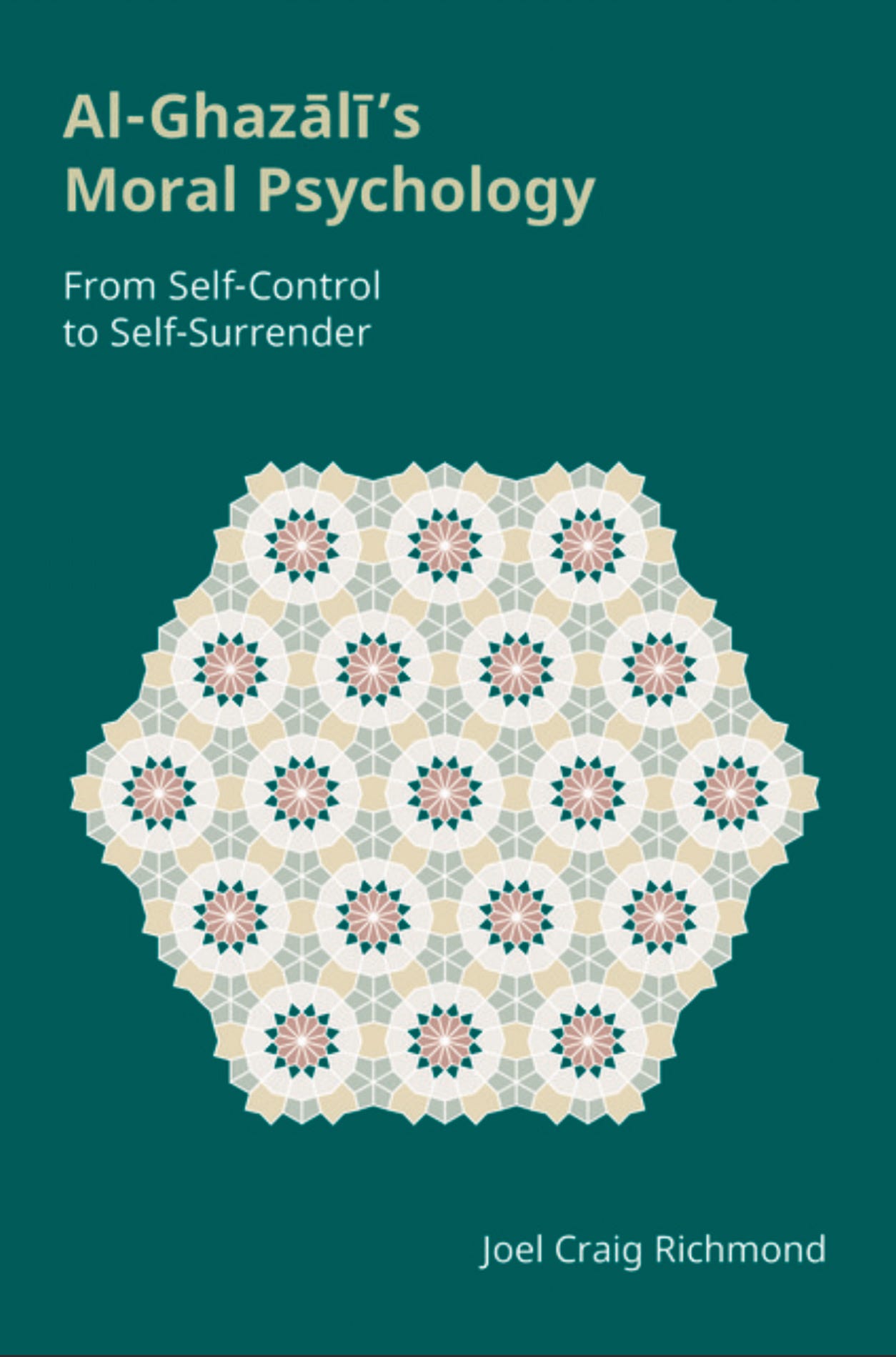
𝐁𝐎𝐎𝐊 𝐒𝐔𝐌𝐌𝐀𝐑𝐘:
Coming September 2025, 𝗔𝗹-𝗚𝗵𝗮𝘇𝗮̄𝗹𝗶̄’𝘀 𝗠𝗼𝗿𝗮𝗹 𝗣𝘀𝘆𝗰𝗵𝗼𝗹𝗼𝗴𝘆: 𝗙𝗿𝗼𝗺 𝗦𝗲𝗹𝗳-𝗖𝗼𝗻𝘁𝗿𝗼𝗹 𝘁𝗼 𝗦𝗲𝗹𝗳-𝗦𝘂𝗿𝗿𝗲𝗻𝗱𝗲𝗿 by Joel Craig Richmond offers a groundbreaking study of one of Islam’s most towering figures. Al-Ghazālī (d. 1111) has long perplexed readers for weaving philosophy, law, and Sufism into a single ethical vision —but Richmond shows that the unifying thread is al-Ghazālī’s dramatic emphasis on self-control as the gateway to human flourishing.
The book journeys through al-Ghazālī’s writings, from the Scale of Action (Mizān al-ʿamal), where virtue ethics and bodily discipline take center stage, to the monumental Revival of the Religious Sciences (Iḥyāʾ ʿulūm al-dīn), where Sufi spirituality reframes everyday practices as paths toward transcendence. Richmond uncovers how al-Ghazālī grappled with destructive vices—gluttony, lust, anger, loose speech—and how he proposed systematic training of body, emotion, and thought to heal the fragmented self.
Yet self-mastery, for al-Ghazālī, is never the end. It culminates in self-surrender—the recognition that true knowledge and ultimate felicity rest in the love of God. In this bold and illuminating study, Richmond restores al-Ghazālī not as a moralist trapped in categories of “reason” or “revelation,” but as a guide who redefined ethics itself as the art of disciplining the self in order to dissolve it before the Divine.
𝐏𝐔𝐁𝐋𝐈𝐒𝐇𝐄𝐑 𝐒𝐔𝐌𝐌𝐀𝐑𝐘 & 𝐏𝐔𝐑𝐂𝐇𝐀𝐒𝐄:
• Equinox:
equinoxreligionlibrary.com/projects/al-ghazali-moral-psychology